Solid ash on around 70 percent of our programme and rubberwood on the remaining 30 percent, with beech, white oak and red oak to order. Janka hardness, bending behaviour and moisture content compared for dining armchair, with the cost ranking.
Hardness is the wrong first question
Janka hardness measures how well a timber resists a dent. It says nothing about how the wood behaves in a joint, how it takes a bend, or how it moves when the humidity changes. Ash scores around 1,320 lbf and rubberwood around 960 lbf, yet the property that decides whether a frame survives ten years of service is how predictably it glues and holds a screw.
For dining armchairs the practical ranking is: joint stability first, then bending behaviour, then hardness, then price. A hard timber that splits at the tenon is worse than a softer one that glues well.
What we actually run
Solid ash is our standard frame timber and it carries roughly seven in ten of the models we build — it bends, it holds a joint and it survives daily contract service in a restaurant or a café. Rubberwood covers most of the remaining thirty percent and keeps the price point workable. Both are kiln-dried in house.
Everything else is a custom run: European beech, white oak and red oak are produced to order, with a higher MOQ and a longer lead time, because that timber is bought in against your order rather than pulled from stock. See what we currently run in wooden dining armchairs.
| Species | Janka hardness | Working character | Role in our programme |
|---|---|---|---|
| Ash | 1,320 lbf | Tough, springy, steam-bends cleanly, open grain takes stain | Standard - around 70% of our programme |
| Rubberwood | 960 lbf | Pale plantation by-product, needs insect treatment, marks easily | Standard - around 30% of our programme |
| European beech | 1,300 lbf | Fine closed grain, bends well, very stable | To order - beech, white oak and red oak are custom runs |
| White oak | 1,360 lbf | Heavy, open grain, takes stain evenly | To order - premium programmes |
| Red oak | 1,290 lbf | Pronounced grain, slightly softer than white oak | To order - mid-market programmes |
Wood species
Moisture content matters more than species
Export seating leaves our kilns at 8 to 12 percent moisture content. Below 8 the timber over-dries and becomes brittle at the joint; above 12 it will move in a container and you will see cracks at the seat rail within a season. Every batch is metered before it reaches the machining line, and the reading goes on the packing list.
This is the single specification most buyers never ask about and the one that decides whether a frame is still tight after two winters of central heating.
Cost, honestly
Rubberwood is the cheapest workable timber and it is legitimate — it is a plantation by-product, not rainforest timber. It needs insect treatment and it marks more readily than ash. Ash costs more and buys you a tougher frame that takes the knocks of daily service, which is why it carries most of our programme.
Beech, white oak and red oak sit above that again, and the premium is not only the board: it is the buying lead time and the higher MOQ of a custom run. If you are quoting a project at a fixed price, tell us your ceiling and we will propose the species that hits it. See what we currently run in wooden dining armchairs.
Grain direction decides whether a leg survives
A leg is strongest when the grain runs along it. Cut across the grain and the same timber snaps under a sideways load that a correctly oriented leg shrugs off. On dining armchairs this shows up at the front legs, which take the entire force when someone sits down hard or pushes back from a table.
Curved components have the same problem: a bend cut from a straight blank crosses the grain at the shoulders, which is exactly where the load concentrates. Steam-bent or laminated blanks keep the grain following the curve, which is why ash — forgiving under steam and tough once it is set — carries most of our bent work while oak mostly does not.
Colour matching across a production run
Timber is a natural material and two boards from the same tree will not match. Frames are sorted into colour families before finishing so a single order ships visually consistent. Skip that step and a set of six around one table reads as three different chairs.
If your project has to match an existing installation, send a physical sample or a RAL reference with the enquiry. Matching after the run is finished means refinishing the run.
Certification and origin
FSC-certified ash, rubberwood, beech and oak are available on request and carry a chain-of-custody surcharge. If your tender documents ask for it, say so at enquiry stage — certificates are raised per shipment, not retroactively.
Questions buyers ask
Which wood is best for dining armchairs?
Ash for most of what we build — it steam-bends, it holds a joint and it survives contract service. Rubberwood when the budget is the constraint. Beech, white oak and red oak when your market specifies a particular species.
Can I order a timber you do not keep in stock?
Yes. European beech, white oak and red oak are produced to order — higher MOQ and longer lead time, and we re-issue the frame drawing and the quotation against the species you choose.
What moisture content do you ship at?
8 to 12 percent, metered per batch. The reading is recorded on the packing list so it can be checked on arrival.
Can I get FSC-certified timber?
Yes, on ash, rubberwood, beech and oak, with a per-shipment chain-of-custody surcharge. Ask at enquiry stage.
Models in this range
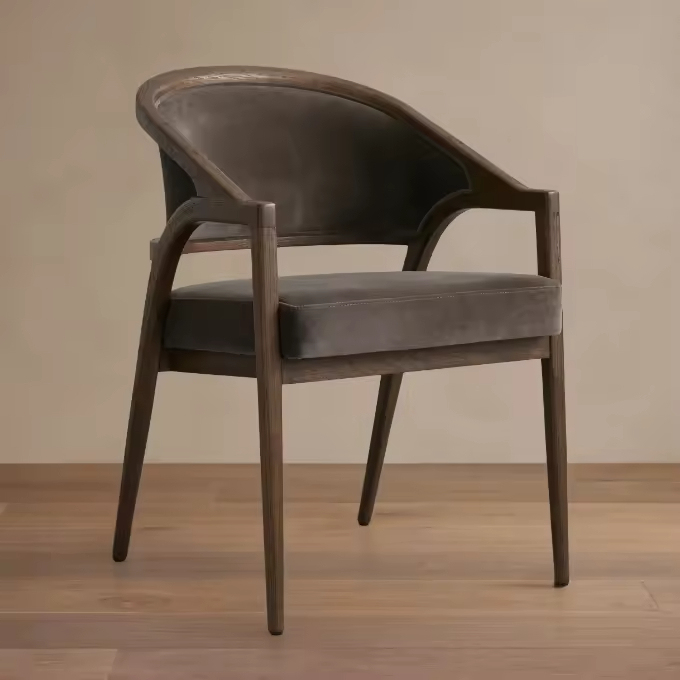 A008GDC Luxury Modern Fabric Dining Room Chair Hotel Upholstered
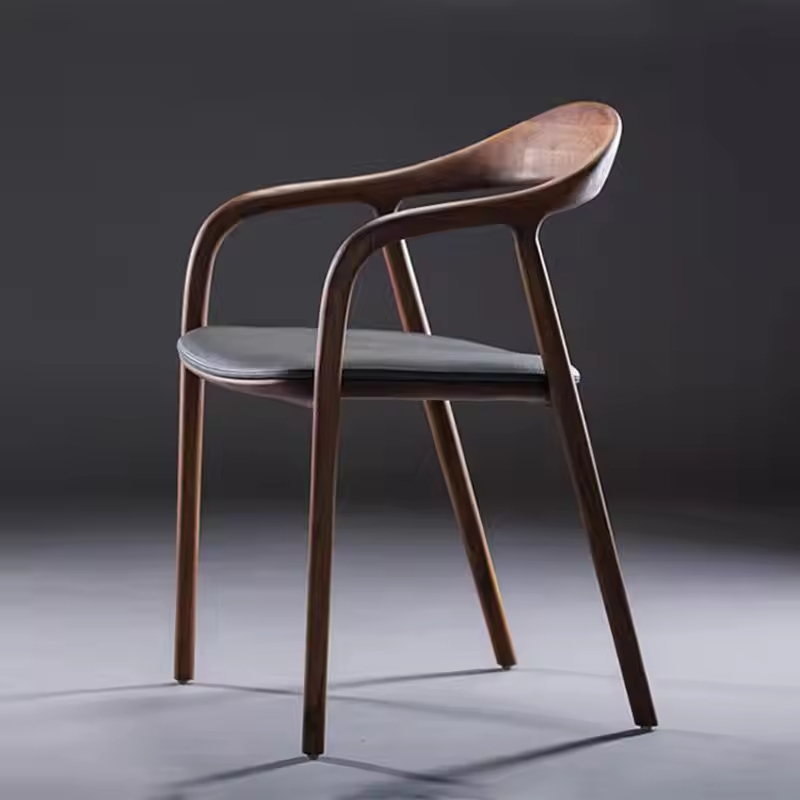 A003GDC Factory Wholesale Accent Black Leather Upholstered Solid Wood
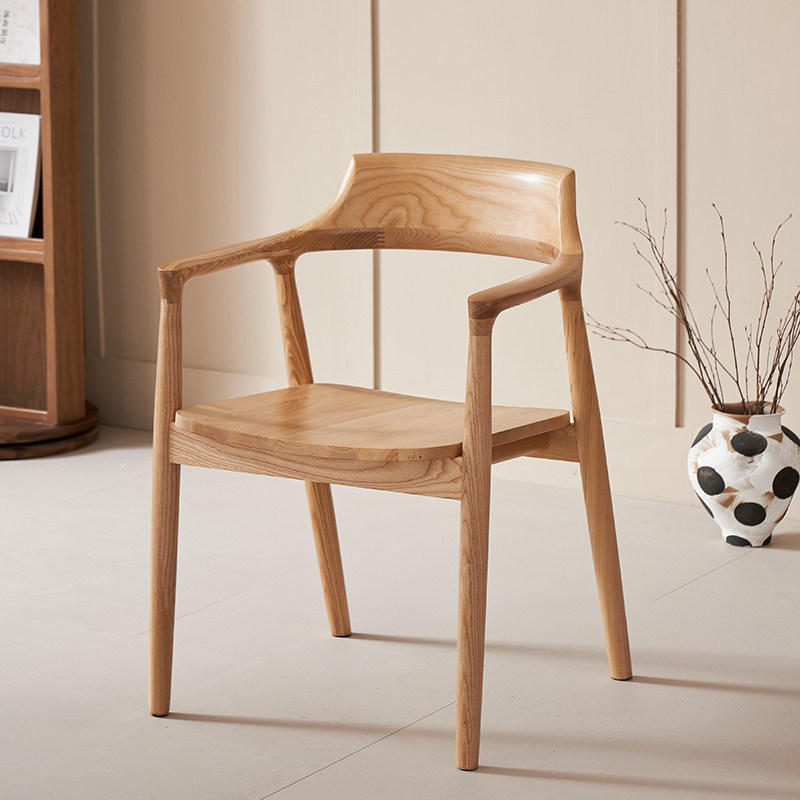 A0025GDC Minimalist Solid Wood Dining Chair with Armrests Mid-Century
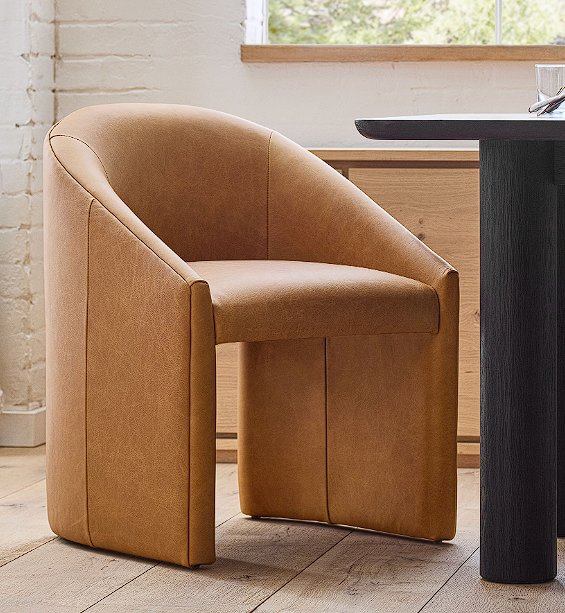 A00137Wholesale Modern Curved Barrel Dining Armchair Camel Faux Leather
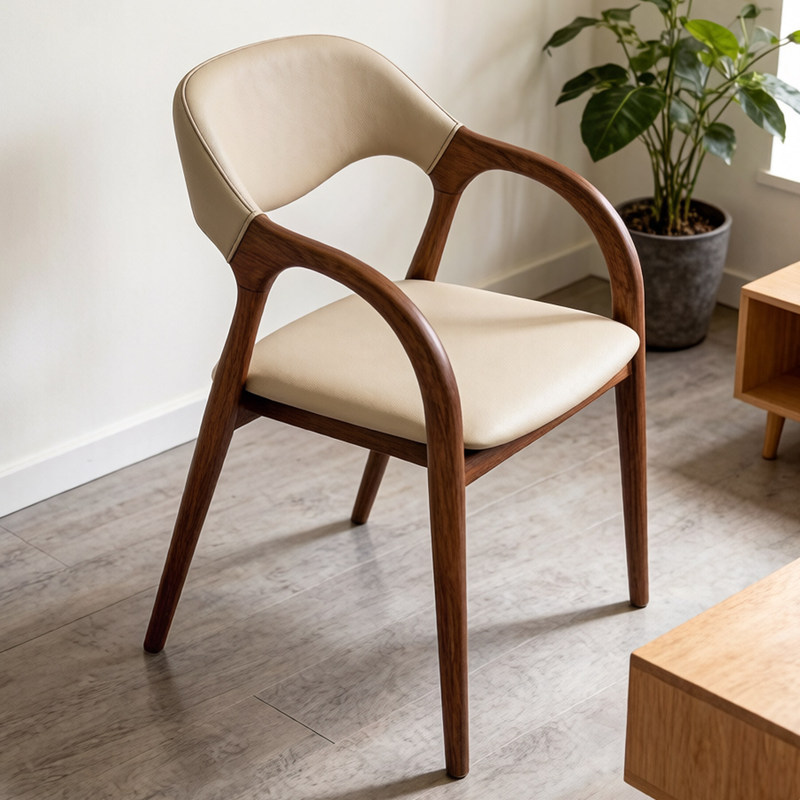 0687GDC 2026 New Nordic Solid Ash Wood Dining Chair
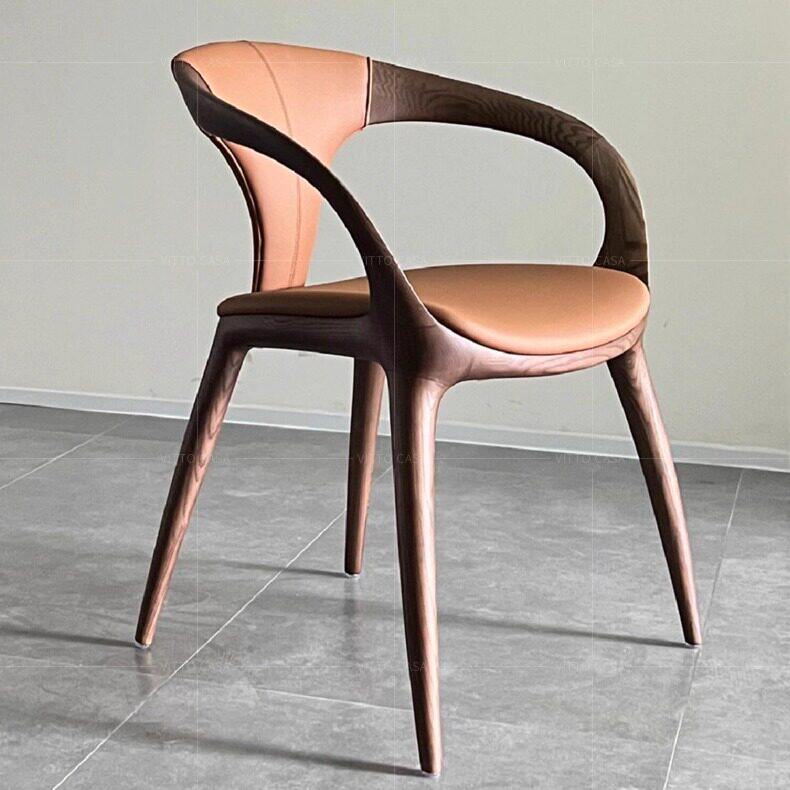 A00132GDC Minimalist Modern Solid Wood Frame Dining Chair Microfiber
Related guides
Ask the factory directly
Send a drawing, a photograph or a target price. We answer feasibility in one to two days from the floor in Longjiang, Foshan.
Request a quote[email protected]